 Tobi Opeyemi Amure
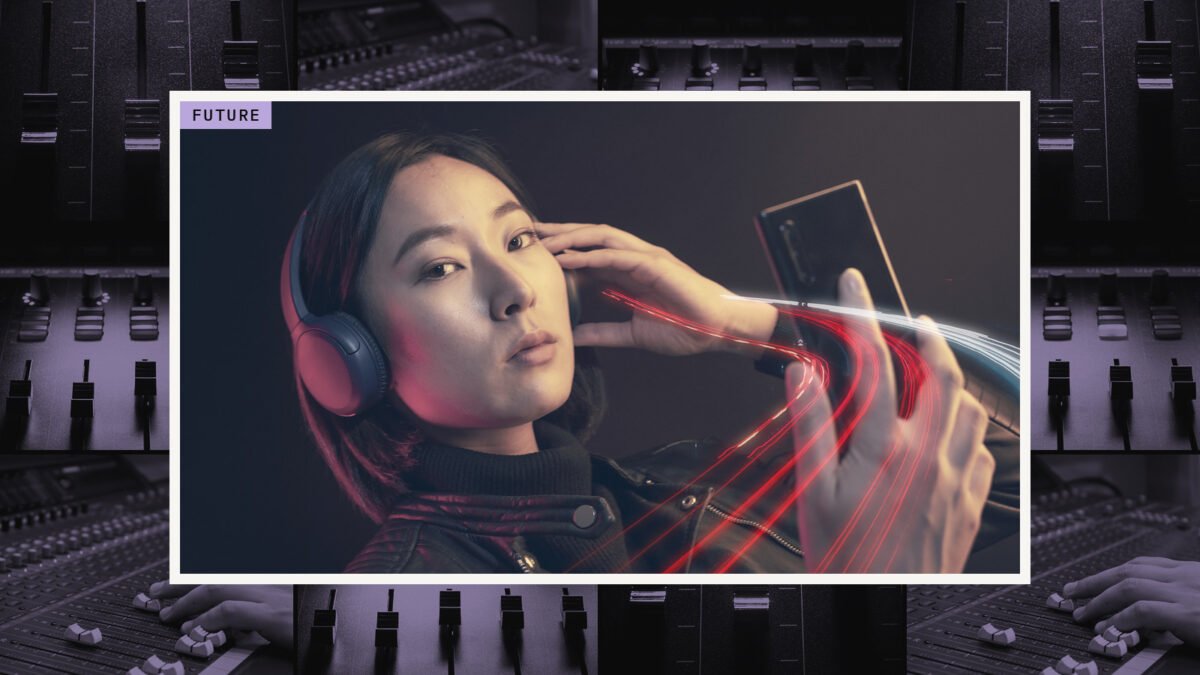
Streaming has a new upload problem, and it arrives at a rate of roughly one synthetic track every second. Deezer says it now receives nearly 90,000 fully AI-generated tracks every day, more than half of everything delivered to the service on peak days.
Universal Music Group put the same number on the table at its third-quarter earnings call on October 29, saying daily uploads of fully AI-generated tracks had climbed from about 10,000 in early 2025. “The volume is growing faster than the safeguards,” CEO Sir Lucian Grainge said.
The flood itself is not really the story anymore. The fight now is over money, and it is hard to see two sides of it: a track nobody sang, played or wrote should not draw from the same royalty pool as one that somebody did.
Grainge was blunt about where Universal stands. “Put plainly, unethically generated AI tracks should never be compensated on the same basis as music that creates real and lasting demand,” he told analysts, arguing that the uniform pro-rata model “incentivizes industrial-scale content production and dilutes the compensation earned by real talent.”
He also pointed to the blues, a genre with a tiny share of listening and outsized history, where he said as many as five of the top 10 albums on some major services’ charts are attributed to AI-generated acts. That is the image worth holding onto: a music built on lived experience, topped by something that has never lived at all.
The streaming services have not waited for a consensus, and they have split into noticeably different camps.
Tidal took the hardest line. Since June 29, recordings it identifies as wholly AI-generated are not eligible for royalty attribution, and listeners can switch AI-labeled tracks off in settings. The music can stay; the money cannot, which is exactly the right instinct.
Deezer tags AI tracks, keeps them out of algorithmic and editorial recommendations and strips fraudulent streams from royalty payments. Its numbers explain why: fully AI-generated music accounts for just 1% to 3% of streams there, yet Deezer says up to 85% of those streams were fraudulent in 2025. A search toggle to hide fully AI-generated music entirely is due before the end of the year.
Spotify has gone after behavior rather than origin. It says it pulled more than 50 million slop and spam tracks out of recommendations this year and removed more than 75 million spammy tracks outright, while labeling AI-generated “AI Persona” artists and leaning on its 1,000-stream royalty threshold.
That threshold is doing quiet work. Spotify says tracks showing a high probability of being AI-generated are 10 times more likely to fall below it, which means much of the synthetic tide never gets paid on Spotify anyway, not because it is AI, but because nobody listens.
Songwriters want a different kind of check entirely. Germany’s collecting society GEMA, the European counterpart to US performing rights groups like ASCAP and BMI, is pushing for what its general counsel Dr Kai Welp called “output remuneration”, arguing that “the real threat to authors is the substitution effect of AI,” such as businesses using AI music as background music instead of paying a license fee.
Put those positions side by side and the shape of the argument is clear. Listeners mostly are not choosing this music; Deezer’s own figures show the uploads vastly outrunning the listening. The money it does collect leans heavily on fraud. That makes Tidal’s rule look less like an outlier and more like the industry floor: label it, let listeners switch it off and stop paying it like human work.
But a floor like that needs a safety rail. Every one of these systems depends on detection, and the services themselves admit its limits: Tidal acts only on “wholly” AI-generated recordings “to avoid false positives,” and Spotify warns detection “will only get harder as generative AI evolves.”
The people most exposed to a bad call are not Universal’s stars. They are independent artists using AI for a stem split or a demo vocal, with no label lawyer to argue their case. Any royalty rule worth backing needs a clear definition, a human review and an appeal that actually works.
There is also a slightly awkward truth for the majors here. Universal says it is helping establish AI labeling and chart standards for “licensed, human-led recordings” while licensing AI partners of its own. The line being drawn is not human versus machine; it is licensed versus unlicensed, and artists should watch closely who gets to decide which side they are on.
The pro-rata model was built for a world where making a record took effort. That world is gone. The royalty pool has to stop pretending otherwise.
Featured image credit: MIDDERMUSIC collage (cropped, framed and tinted). Photo: “Woman listening music on her smartphone” by Vu Hoang via Wikimedia Commons, CC BY 2.0 (creativecommons.org/licenses/by/2.0). Background images: “Faders of a Mixing Console” and “Modern Mixing Console” by Dejan Krsmanovic, CC BY 2.0 (creativecommons.org/licenses/by/2.0); “Fader tweaked on Mackie D8B Digital Mixer” by hanmaili (CC0), via Wikimedia Commons. Stock-style photo used for illustration only.