There’s no doubt about it: making your own music is fun and exciting.
But when you come to the part where you want to distribute your music, things can get a little complicated.
Luckily, we live in a time when most artists distribute their music online, and there are ways to do it without a big budget.
In fact, there are online platforms that offer free music distribution for artists who are just starting out.
Free distribution usually means no upfront fee, not no cost at all. The service keeps a share of your royalties instead, or it charges for extras later. Some well-known names have also dropped their free plans, so this guide splits the list into services with a free option and paid alternatives worth knowing about.
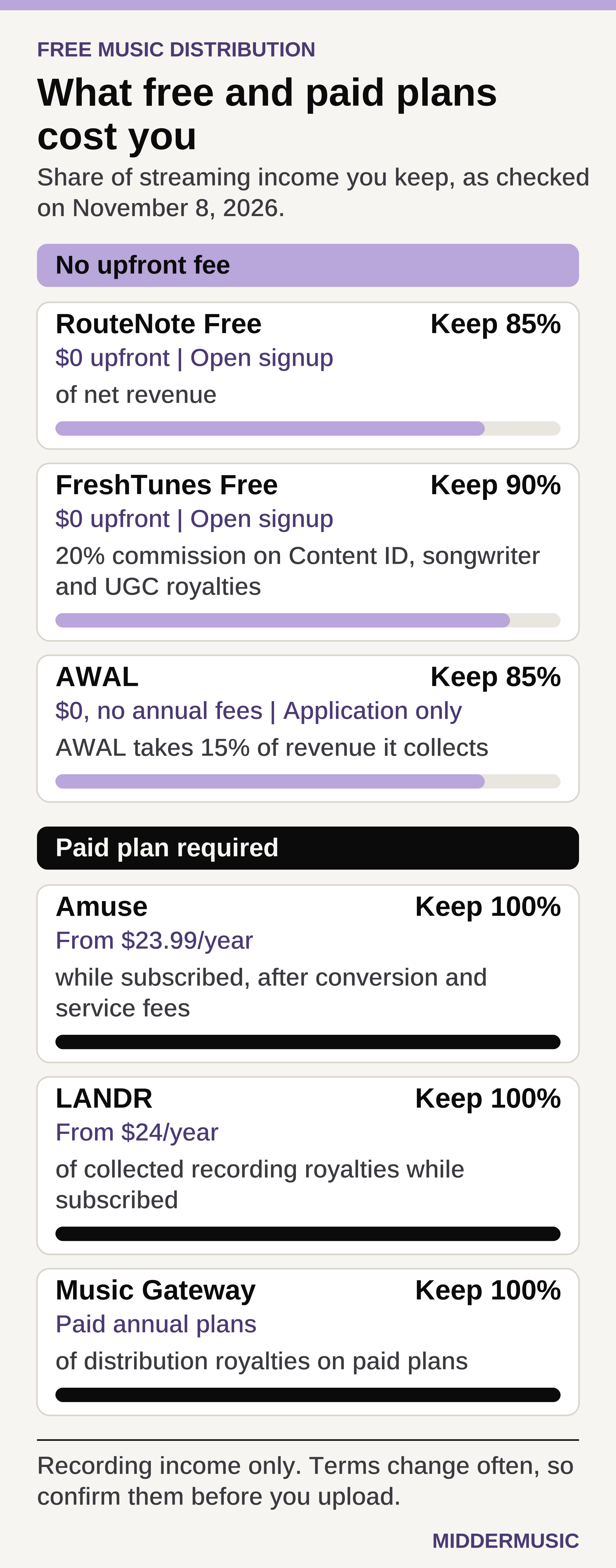
Short answer: as of November 8, 2026, RouteNote and FreshTunes still offer free plans with open signup, and AWAL charges no upfront fees but only accepts artists by application. Amuse, LANDR and Music Gateway now need a paid plan to distribute.
| Service | Upfront cost | Share of streaming income you keep | Signup | Source |
|---|---|---|---|---|
| RouteNote Free | $0 | 85% of net revenue | Open signup | RouteNote support |
| FreshTunes Free | $0 | 90% (10% commission; 20% on Content ID, songwriter and UGC royalties) | Open signup | FreshTunes pricing |
| AWAL | $0, no annual fees | 85% (AWAL takes 15% of revenue it collects) | Application only | AWAL FAQ |
| Amuse | From $23.99/year | 100% while subscribed (after conversion and service fees) | Open signup, paid plan required | Amuse pricing |
| LANDR | From $24/year | 100% of collected recording royalties while subscribed | Open signup, paid plan required | LANDR support |
| Music Gateway | Paid annual plans | 100% of distribution royalties on paid plans | Open signup, paid plan required | Music Gateway pricing |
Prices and splits were checked on each provider’s own pricing or help pages on November 8, 2026. They change often, so confirm the current terms before you upload.
Best Free Music Distribution Services
If you want your music to be heard by people across the world, you need to distribute your music to large streaming platforms.
And sometimes, that can come at a cost, especially if you want to distribute a lot of music.
The first three services below let you release music without paying upfront. The last three are paid alternatives that let you keep more of your streaming income in exchange for a yearly fee.
Either way, most distributors give newcomers two basic options:
- Paying a fee or subscription and keeping more of your earnings
- Giving up a share of your royalties instead of paying upfront
Nevertheless, if you want to reach a wider audience and get yourself noticed, distributing your music by using a trusted, well-known platform is a must.
Here are the services with a free option first, followed by the paid alternatives.
1. RouteNote
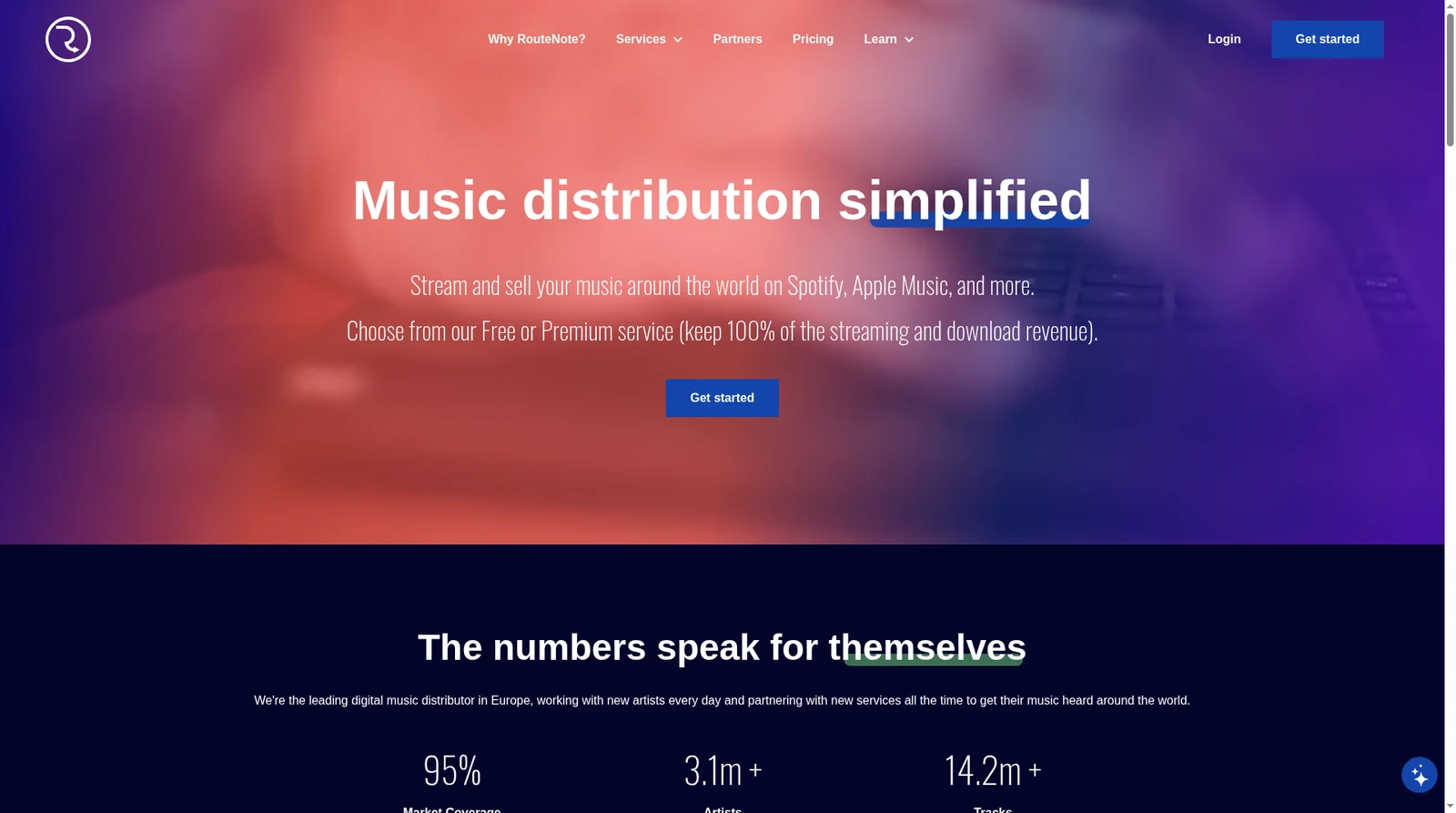
RouteNote is a good option for anyone looking for a simple free music distribution platform.
Its Free plan has no upfront cost, and RouteNote keeps 15% of the net revenue it receives, so you keep 85%. It says it doesn’t charge extra for YouTube Content ID, for adding new stores, or for keeping your music online (source).
If you want to keep 100% of your streaming and download revenue, you can upgrade a release to Premium. Premium is a one-off fee per release: $10 for a single, $20 for an EP (2 to 6 tracks), $30 for an album (7 to 18 tracks), or $45 for an extended album (19 or more tracks). After the first year, there’s a $9.99 annual fee per release to keep it on Premium. If you don’t renew, the release moves back to the Free plan (source).
RouteNote also offers a custom pricing option called All Access, which is aimed at artists and labels who want a tailored deal.
If you’re a beginner and you just want to release your tracks, the Free plan covers the basics. If one release starts earning steadily, upgrading that release to Premium can make more sense than giving up 15% of its income.
Pros:
- No upfront cost on the Free plan
- Content ID and new stores at no extra charge
- You can switch a release between Free and Premium
Cons:
- Takes 15% of net revenue on the Free plan
- Premium is charged per release, so large catalogs add up
2. FreshTunes
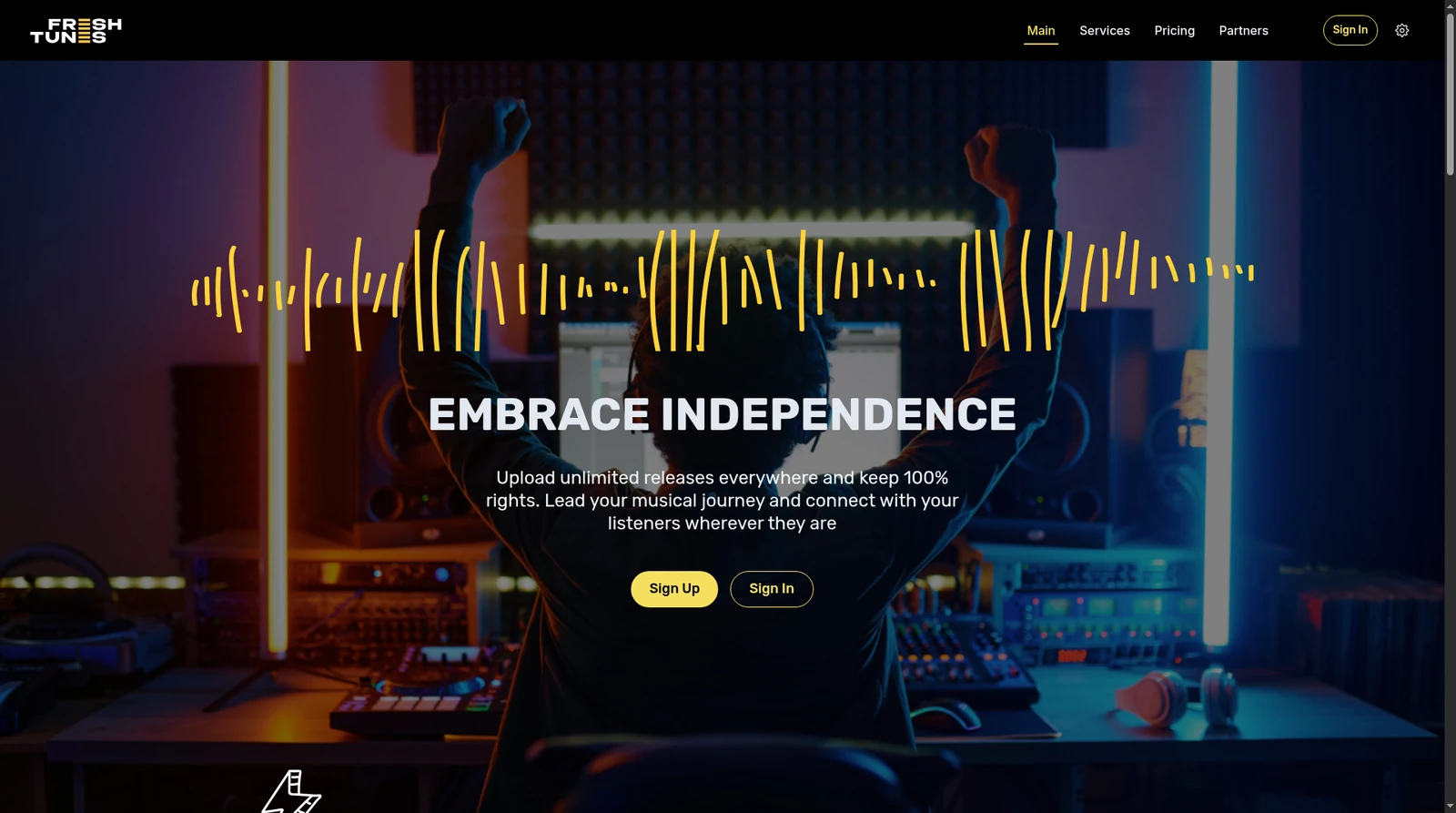
If you want another open-signup free plan, you can check out FreshTunes.
FreshTunes distributes to major platforms such as Spotify, Apple Music, iTunes and Shazam, and its Free plan has no upfront fee.
Free doesn’t mean you keep everything, though. On the Free plan, FreshTunes takes a 10% commission on streaming royalties and a 20% commission on YouTube Content ID, songwriter and UGC platform royalties. The Free plan also lists release review, support and payouts within 30 days (source).
A paid Label plan costs $9 a month or $89 billed annually, and it adds extra features for artists who release more often.
If you’re just starting out and don’t mind a slower review queue, the Free plan is a simple way to get your music into the main stores.
Pros:
- No upfront fee
- Open signup
- Paid plan available if you outgrow the free tier
Cons:
- Commission of 10% on streaming and 20% on other royalty types
- Reviews, support and payouts can take up to 30 days on the Free plan
3. AWAL
AWAL is another well-known distribution company worth checking out.
It’s owned by Sony Music Entertainment, and it’s generally known as an alternative to the traditional music label deal. AWAL artists can keep their music and creative rights.
AWAL doesn’t charge upfront or annual fees for uploading or storing your releases. Instead, its standard deal takes a 15% share of the revenue it collects for you, on a 30-day rolling term you can end with 30 days’ notice (source).
In other words, AWAL only earns when your music earns.
However, AWAL seems to stand out from other free music distribution companies for one particular reason.
Unlike open-signup distributors, AWAL works by application. You submit your music, and its team decides whether to accept you, so an engaged fan base helps.
So, if you want to get accepted by AWAL, you’ll need to have a certain level of popularity on platforms like SoundCloud, Spotify, and YouTube.
AWAL also asks members to upload music and metadata at least 4 to 6 weeks before release, so it has time to pitch the release to streaming services.
There are two main ways to work with AWAL:
- Standard distribution: you apply through the submission form or its A&R team, and if you’re accepted you get distribution for the 15% revenue share.
- AWAL Recordings: label services for a select roster, which may include funding, marketing and promotion. These deals are customized and usually involve a higher share and a recoupable balance.
Pros:
- No upfront or annual fees
- You can keep your creative rights
- Label services available for selected artists
Cons:
- Application only, so acceptance isn’t guaranteed
Paid Alternatives to Free Distribution
These services aren’t free, but they’re worth knowing about if you release often. Once you’re earning steadily, a yearly fee can cost less than giving up a share of every payment.
4. Amuse
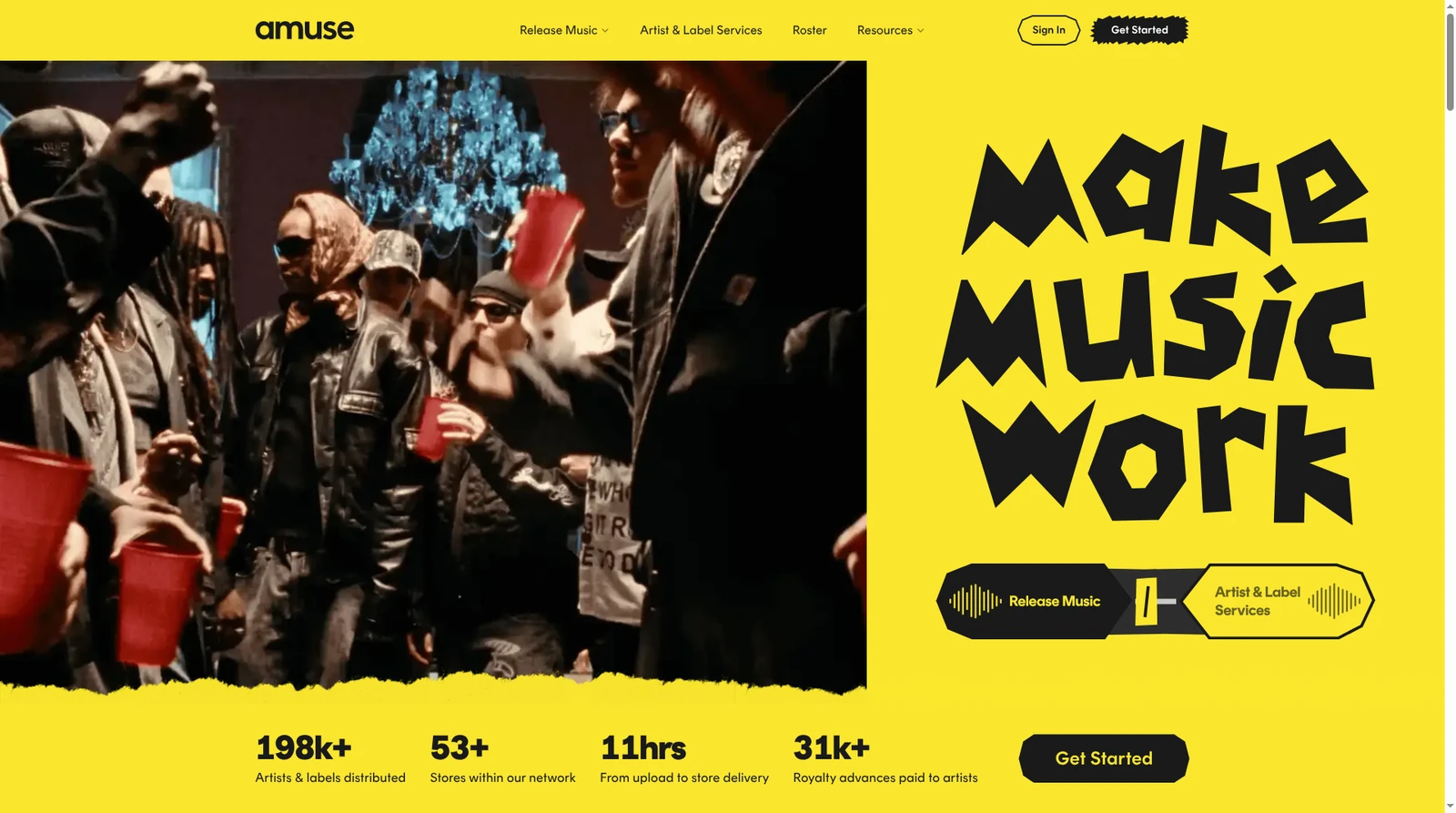
Amuse used to be one of the best-known free distributors, but it no longer offers free distribution.
Founded in 2015 in Sweden, Amuse is a digital music distribution service as well as an independent record label.
You can create an account and build a release for free, but you need a plan to send it to stores. Plans are billed annually: Artist at $23.99, Artist Plus at $39.99, and Artist Pro at $59.99 a year. Every plan includes unlimited releases, and you keep your earnings after currency conversion and service fees (source).
If you cancel, Amuse says your music stays live, but you receive 75% of your earnings until you subscribe again.
You can easily upload and keep track of your music with their Android and iPhone apps. You’ll also get streaming insights and audience data.
Pros:
- Low annual price for unlimited releases
- Music stays live if you cancel
- Mobile apps for managing releases
Cons:
- No free distribution plan
- Annual billing only
5. LANDR
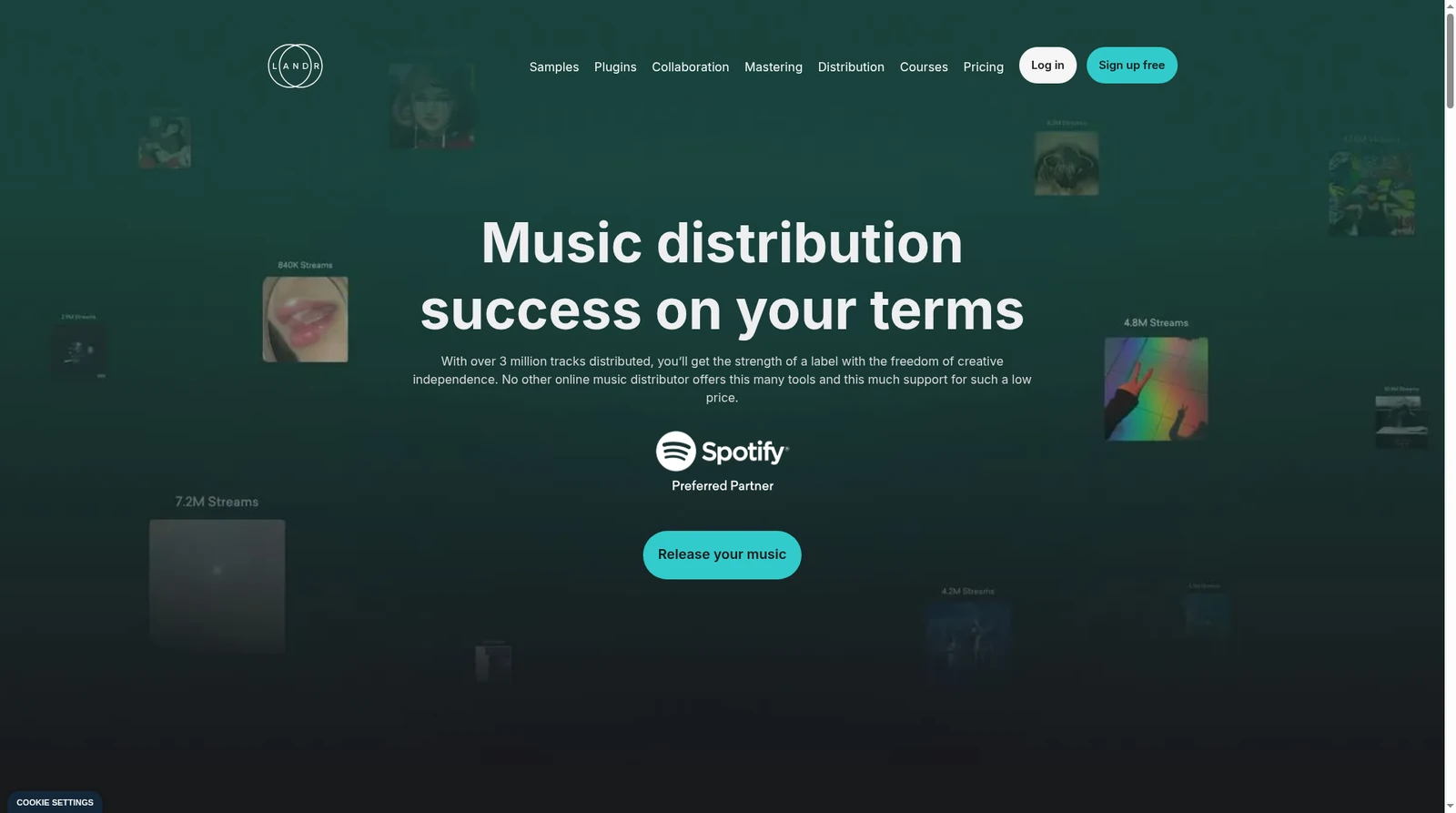
LANDR is a paid alternative that suits musicians who also want mastering and production tools.
LANDR allows you to distribute an unlimited number of songs, and it also offers online collaboration tools.
However, LANDR is not free. Distribution Basic costs $24 a year and Distribution Pro costs $45 a year, and unlimited distribution is also included in LANDR Studio plans, which start at $8.25 a month (source).
While your subscription is active, LANDR pays you 100% of the recording royalties it collects. If you cancel, your releases stay live, but LANDR takes a 15% commission (source).
Apart from distribution, LANDR is also known as an online mastering platform, and its Studio plans bundle mastering, plugins and samples.
All in all, LANDR is an excellent creative platform, and it’s a great option for musicians interested in making their own music as well as distributing it.
Pros:
- You can distribute an unlimited number of songs
- 100% of collected recording royalties while subscribed
- Offers additional services and tools
Cons:
- It’s subscription-based
6. Music Gateway
Music Gateway is a versatile company focused on music distribution, promotion, publishing, and other music-related processes.
With Music Gateway, you can distribute your music, and it will deliver it to many major digital storefronts.
However, distribution requires a paid plan. On its pricing page (checked November 8, 2026), the Pro plan was listed at €79 a year and Unlimited at €189 a year, with prices also available in US dollars and pounds (source).
With a Music Gateway subscription, you’ll also get access to its licensing, publishing, playlist submission and AI mastering tools.
The Pro plan is built for one main artist and includes two distribution submissions a month. The Unlimited plan removes those limits.
Both plans list 100% of distribution royalties, while publishing and sync placements carry a commission that’s lower on Unlimited.
All things considered, Music Gateway is certainly not the most budget-friendly option on this list, but it’s definitely worth checking out.
Pros:
- Offers promotion and publishing
- Provides music tools
Cons:
- No free plan
- Submission limits on the Pro plan
Free vs. Paid Music Distribution
Free plans trade an upfront fee for a share of your income. Paid plans charge a yearly or per-release fee and usually let you keep all of your streaming income. Either way, a distributor only handles your recording income. Songwriting and publishing income is collected separately, which our guide to how music royalties work explains.
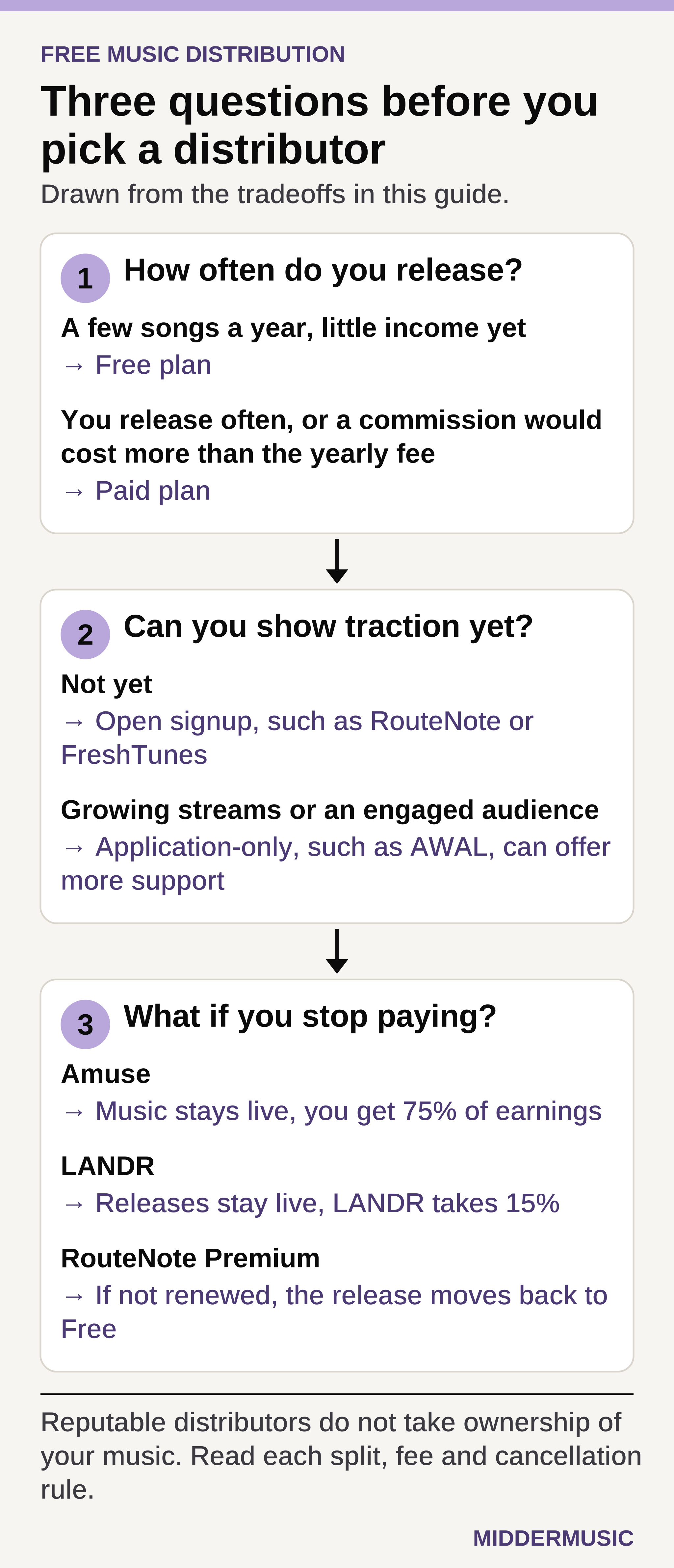
- Choose a free plan if you release a few songs a year and don’t expect much income yet.
- Choose a paid plan if you release often or a commission would cost more than the yearly fee.
- Check what happens if you stop paying. Some services keep your music live with a commission, and others may remove it.
Open Signup vs. Application-Only Distributors
Most distributors let anyone sign up and upload. Others, such as AWAL, review applications and only accept artists they think they can help. Application-only services can offer more support, but you need to show some traction first, such as growing streams or an engaged audience.
How Far Ahead Should You Upload?
Upload as early as you can. Spotify says that if you pitch an unreleased song through Spotify for Artists at least 7 days before release, it will be added to your followers’ Release Radar playlists (source). AWAL asks for 4 to 6 weeks, and some paid plans let you schedule releases with shorter lead times. Three to four weeks is a sensible target for most independent releases, and our guide on how to get playlisted on Spotify covers pitching in more detail.
How to Distribute Your Music
Making music is a complex and exciting process.
Once you’re done with songwriting, recording, mixing, and mastering, you’ll probably feel exhausted and incredibly excited.
But you can relax – the hard part is done. With a good music distribution platform, you can release your music without breaking a sweat.
Most platforms in this guide work the same way: you upload your music and artwork, add your metadata, and they deliver it to Apple Music, Spotify, YouTube, and other platforms.
And that’s arguably the easiest way to distribute music.
If you want to distribute your music on your own, you’ll most likely come across some obstacles.
The thing is, it’s possible to distribute music by yourself, but many relevant outlets simply don’t allow individuals to upload their music. There are simply too many artists.
Releasing your music with a distributor also makes things easier for you. You don’t have to worry about anything except making a few clicks to upload your track.
It’s quite affordable as well. A few services still offer free plans, and others charge a yearly or per-release fee.
Either way, you should opt for a platform that fits you best.
Some websites offer mastering and publishing services, online tools, promotion, licensing, scheduling, and many other valuable features.
It all depends on your plans, needs, and expectations.
Before deciding anything, make sure the platform you opt for offers everything you need as an artist.
Fortunately, there are so many great options for musicians out there.
And although many of these websites take a certain percentage of royalties, they are actually a good way to get started.
Whichever you choose, read the terms. Reputable distributors don’t take ownership of your music, but each one has its own split, fees and cancellation rules.
But each platform comes with its advantages and disadvantages.
You just need to find a distributor you believe it’s best for you.
See also: Best Music Distribution Services & Companies
Music Distribution Tips
With digital music distribution companies, releasing new music is quite easy.
You just need to upload your music, and they will do the rest.
However, you should always keep track of your progress and make sure you’re not losing too much money. Many websites take revenues, and at some point, you might feel like you want to keep your music royalties.
You should always release your music with a distributor that fits your needs. And needs can change, so make sure the platform you use aligns with your goals and preferences.
On the other hand, every digital platform comes with its pros and cons, so don’t expect to get perfect conditions. At least not right away.
Regardless of what platform you choose, you should make your music searchable. When submitting your album or song for digital distribution, pay attention to the title, your name, release date, track titles, genre, and other relevant data.
Finally, if you want your music to reach a wider audience, you need to promote yourself.
Yes, your distributor will deliver your music to relevant streaming platforms and stores.
But don’t expect them to do the promotional work for you. Music distribution companies usually don’t offer promotion services for free, so unless you opt for their subscription plan that includes promotion, you’ll have to do it by yourself.
So, take advantage of social media and other promotional tools you have at your disposal. You can even create hype for your album before its release.
Before wrapping things up, let’s quickly summarize our tips for distributing music:
- Find the right platform
- Keep track of your progress
- Make your music searchable
- Be active
- Promote your music
Free Music Distribution FAQ
Is free music distribution really free?
Usually not completely. Free plans skip the upfront fee, but the distributor keeps a share of your royalties, and some charge for extras or have slower review and payout times.
Do I keep my rights and all my royalties?
With reputable distributors, you keep ownership of your recordings. Whether you keep all of your royalties depends on the plan. Free plans take a commission, while paid plans often pass through 100% of streaming income while you subscribe.
Can I switch distributors without losing streams?
Usually, yes. If you upload the same audio with the same ISRC and UPC codes and only take the old version down once the new one is live, stream counts and playlist placements can carry over. AWAL describes this process in its FAQ, and Amuse offers a release importer for the same purpose.
Free Music Distribution: Final Thoughts
Releasing your own music might seem intimidating and difficult, but it doesn’t have to be that way.
If you find a reliable music distribution platform that fits your goals and preferences, you’ll be able to release your music without any problems.
Getting your music onto the main streaming platforms is one of the most useful first steps for an independent artist, and you don’t need a big budget to do it.
Hopefully, your music will get noticed and you will grow your audience.
And maybe that will be the first step toward getting the record deal of your dreams.
You may also like: 15 Ways to Promote Your Music