Will
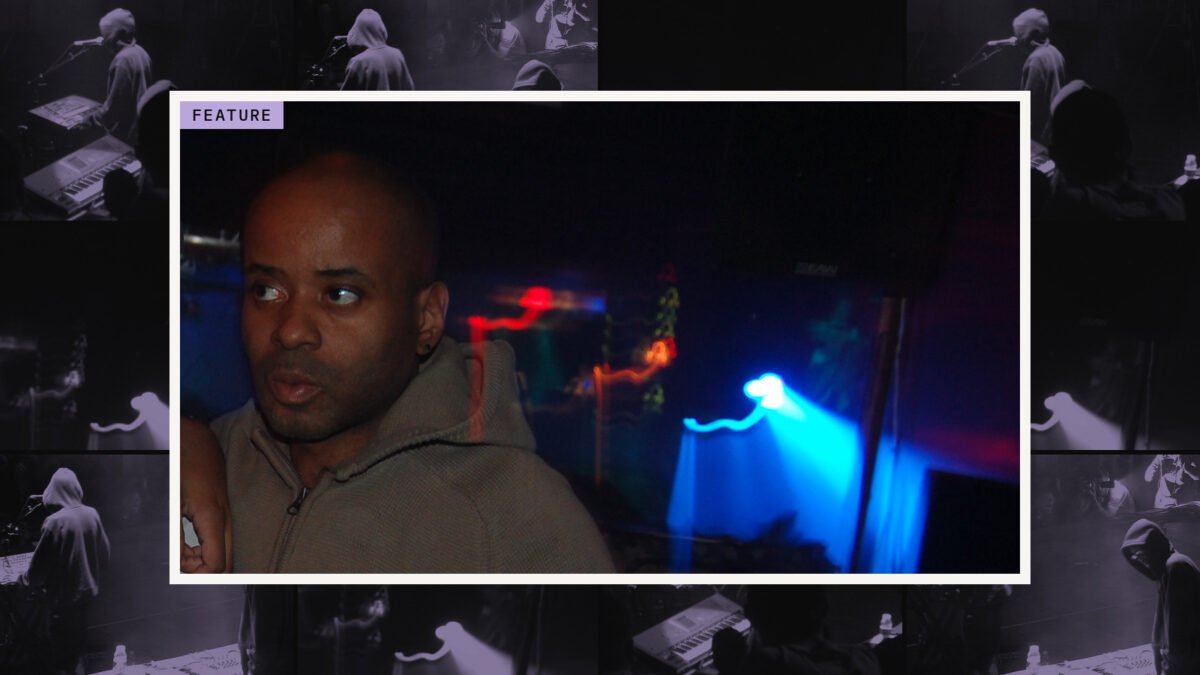
Juan Atkins didn’t just help invent techno; he gave it a name, a mission statement and a future to aim at, and the rest of the world has been dancing inside his blueprint for 40 years.
The Detroit producer, DJ and label founder has died at 64. According to Resident Advisor, he was found unresponsive in a Mexico City hotel room ahead of a scheduled set at YuYu Cine Club, and was pronounced dead in hospital; his agency, Greensmith Artists, announced the news on November 1. No cause of death has been reported.
The obituaries have rightly called him a pioneer. That word undersells him. Pioneers stumble onto new ground; Atkins drew the map first, then walked it.
Born in Detroit in 1962, he moved with his family to rural Belleville, Michigan, where he fell in with two schoolmates, Derrick May and Kevin Saunderson.
The Belleville Three, as they became known, shared gear, studio time and an appetite for the strange late-night broadcasts of Detroit radio DJ the Electrifying Mojo, alongside Kraftwerk and Afrika Bambaataa.
The key text, though, wasn’t a record. It was Alvin Toffler’s The Third Wave, a futurist book about the shift from industrial to information society.
“I had a class called future studies, about the transition from an industrial society to a technological society,” Atkins told the Guardian in 2014. “I just applied a lot of those principles to my music-making.”
Think about where he was standing when he read it. Detroit was the industrial society, a car city watching its factories hollow out, and here was a Black teenager deciding that the machines replacing the assembly line could be made to swing.
With Richard “3070” Davis, a friend from community college, he formed Cybotron at the start of the 1980s. Working with newly affordable kit like the Roland TR-808 drum machine and Korg MS-10 synthesizer, the duo cut “Alleys of Your Mind,” “Cosmic Cars” and then, in 1983, “Clear,” a cold, robotic electro track that sold 50,000 copies and broke out of the underground.
“Clear” is the one that never went away. It has been sampled again and again, most famously by Missy Elliott, who built 2005’s “Lose Control” on it and took the song to No. 3 on the Billboard Hot 100. Plenty of people who have never heard of Cybotron know it by heart.
Here’s the 1983 original, still as cold and precise as the day it was cut.
Then came the solo work that made the genre. After Cybotron split in 1985, Atkins launched his Metroplex label and started releasing records as Model 500, beginning with “No UFO’s,” the single that helped carry the Detroit sound to the UK.
Here’s the 1985 Metroplex original.
In 1988, his track “Techno Music” appeared on the UK compilation Techno! The New Dance Sound of Detroit, and the word stuck.
Atkins insisted he had always called it that. “All the Detroit stuff was pure futuristic,” he told Pitchfork in 2005, drawing the line between his city’s sound and Chicago house’s disco roots.
That distinction matters more than it sounds. Chicago house looked back to the dancefloor; Detroit techno looked forward, past it, toward something nobody had built yet.
Europe heard the call louder than America did. The Belleville Three found audiences and gigs abroad as the Berlin Wall came down, and Berlin went on to become the genre’s spiritual capital, its clubs and festivals turning a Michigan teenager’s idea into one of the great cultural exports of the century.
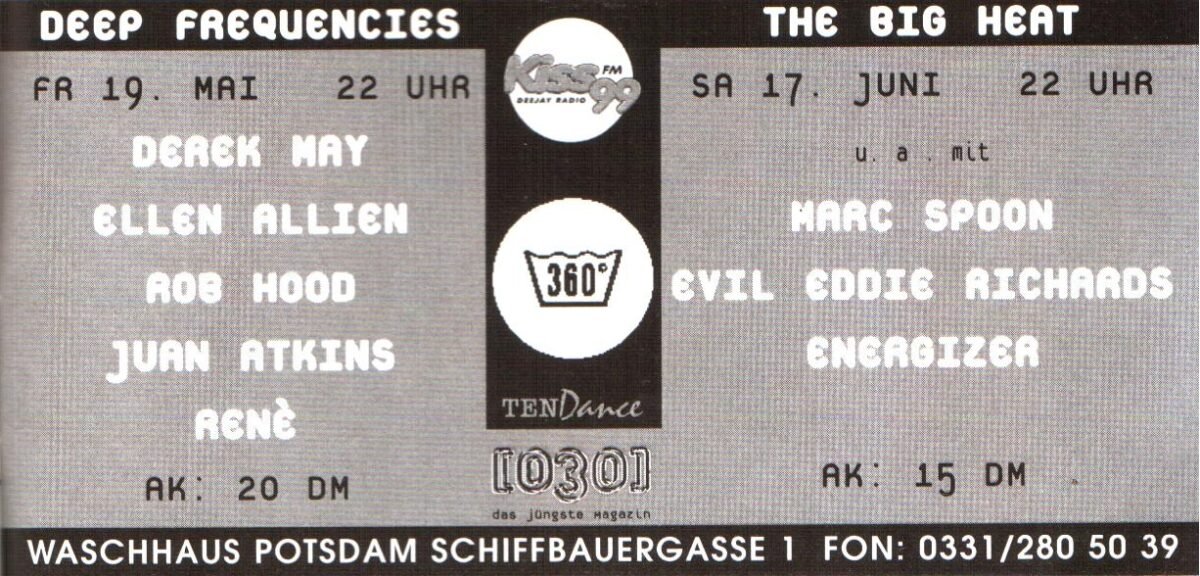
There’s a lingering sting in that story. The Belleville Three spent years pushing back on fans who believe techno was born in Europe.
Atkins’s death is a fitting moment to settle the paperwork. Techno is Detroit’s, the word was his, and the sound came out of Black American futurism, from a kid reading Toffler in a post-industrial city.
He never treated the dancefloor as an escape hatch, either. “My lyrics are supposed to make you think about something other than shaking your booty on the dancefloor and falling in love,” he told the Guardian in 2024. Hear “Techno City,” Cybotron’s 1984 ode to a struggling Detroit, with that in mind.

Nor did he stop moving. The late 1990s brought the uptempo Infiniti project; the 2010s brought Borderland, a partnership with German producer Moritz von Oswald that produced albums in 2013 and 2016. In 2023 he revived Cybotron with Laurens von Oswald for Maintain the Golden Ratio, its first EP in 28 years.
He was still on the road at the end, playing clubs and festival main stages, which is how he came to be in Mexico City on a Saturday night with a set to play. There are worse ways to describe a life’s work than that.
This year he played Dekmantel’s RADAR stage in Amsterdam; the festival has posted its stream of the set.
The tributes have come from everywhere his music traveled. “Juan was the originator of Techno, a true visionary who opened the door for so many of us, myself included,” Saunderson wrote on Sunday, recalling how Atkins showed him how to finish his first record, “Triangle of Love.”
Detroit Mayor Mary Sheffield put it most simply: “As a teenager with a synthesizer and a big idea, he imagined what the music of the future could be. Then he built it.”
Where to start? Cybotron’s “Clear” and “Techno City,” then Model 500’s “No UFO’s” and “The Chase.” Play them back to back and every warehouse, every Berlin queue, every festival main stage running on a four-on-the-floor kick suddenly sounds like an echo.
Atkins imagined the future from a dirt road in Belleville. The least the future can do now is remember who built it.
Featured image credit: MIDDERMUSIC collage (cropped, framed and tinted). Photo: “Hel10 (4307848491)” (Juan Atkins, January 2010) by Angie Linder via Wikimedia Commons, CC BY-SA 2.0 (creativecommons.org/licenses/by-sa/2.0). Background images: “Model500 3” by Angie Schwendemann, CC BY-SA 2.0 (creativecommons.org/licenses/by-sa/2.0), and “Model500 2” by Dave Walker, CC BY 2.0 (creativecommons.org/licenses/by/2.0), via Wikimedia Commons. This featured image is licensed CC BY-SA 2.0 (creativecommons.org/licenses/by-sa/2.0). Inline images: “Model500 3” by Angie Schwendemann, CC BY-SA 2.0 (creativecommons.org/licenses/by-sa/2.0), and “Waschhaus-potsdam 1995-05” by Das Kraftfuttermischwerk, CC BY 2.0 (creativecommons.org/licenses/by/2.0), via Wikimedia Commons.