"Independent" is the most valuable word in music marketing, and the least examined. It should mean one thing: who owns the masters, not whose pipes carry them. On that test, plenty of today’s independents pass, and that is exactly the problem.
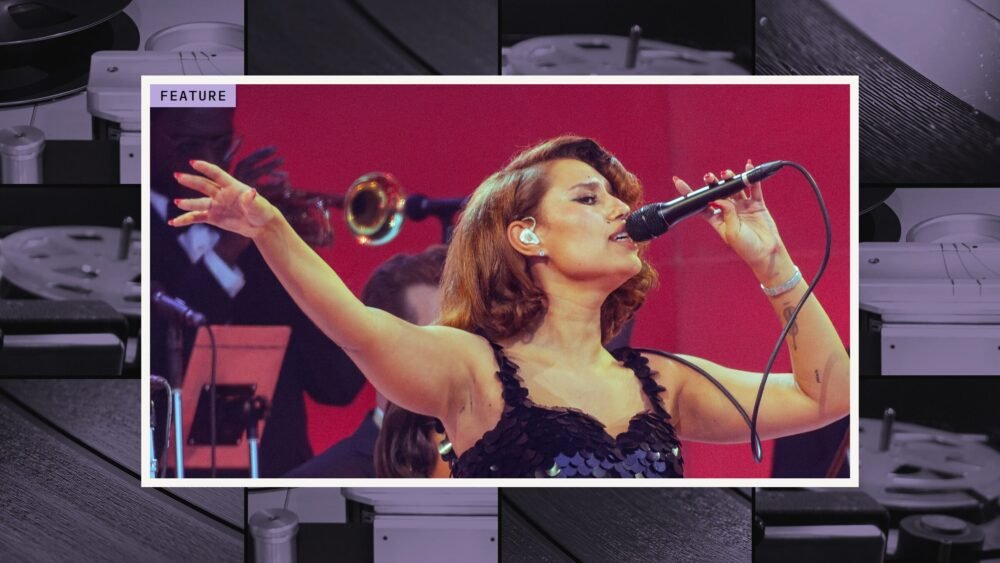
RAYE, whose escape from a stalled major-label deal became British pop’s favorite independence story, released her breakthrough through Human Re Sources, a company Sony Music bought in 2020 and folded into The Orchard.
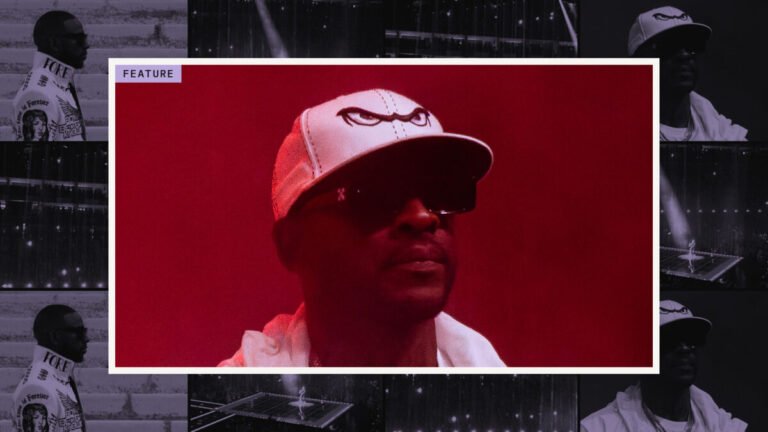
Megan Thee Stallion announced in February 2024 that she would "maintain her independence" with distribution and resources from Warner Music Group.
Neither claim is a con. Both artists are described as owning their masters.
Ownership is only half the sentence. The other half is who holds the exclusive rights to those masters, for how long, and on what terms, and that half almost never makes the press release. Without it, "independent" is a headline, not a fact.
Ownership is the right test
The trade bodies already settled the definition, and they settled it the right way. AIM, A2IM and WIN all draw the line at who owns the company and the recordings, not at who ships the files.
Distribution, as WIN puts it, "is interchangeable and involves only a modicum of risk." That is the right instinct: whoever owns the recording, and can sell it, is the one who earns the word. The rest is plumbing.
The interesting failure is not the rulebook. It is what the market has done with a test it can pass too easily.
The UK charts figured this out in 2009, when the Official Charts Company switched to label ownership and stopped letting the distributor decide who counted as indie.
The result is quietly funny: Radiohead’s OK Computer, made for Parlophone in the EMI era, sits on this week’s Official Independent Albums Chart, because the band’s catalog moved to Beggars’ XL Recordings in 2016. Funny, but correct: the recordings changed hands, and the chart followed the deed.
Billboard has not caught up.
Its Independent Albums chart still counts labels "distributed independently or through the indie arm of a major label group," plus independently owned labels distributed directly by Universal, Sony or Warner, which is how the Frozen and Moana soundtracks, credited to Walt Disney, sit on this week’s list.
A rule that roomy measures routes to market, the very test the UK threw out in 2009, and turns indie into a filing category rather than a claim about who owns what. Disney on an indie chart should have been the end of the argument.
The majors own the pipes
Of course the word stayed roomy. The plumbing belongs to the big three.
Sony owns The Orchard and AWAL, Warner owns ADA, and Universal runs Virgin Music Group, which bills itself as "the world’s leading partner to independent labels and artists."
The self-described leading partner to independents is, in other words, a division of a major. That is not a partnership of equals. It is a supply chain with better branding.
In February 2026 the European Commission cleared Universal’s purchase of Downtown only on condition that it sell Curve, a royalty platform the Commission found processes "information regarding the commercial relationship between an artist and its label."
The worry, in plain terms: whoever runs the pipes can see what flows through them.
The best public numbers are years old, which is its own kind of tell. The last WINTEL report found nearly $1.5 billion of independent label revenue in 2017 came through major-owned distribution, 22.2% of the independents’ market share.
The UK’s Competition and Markets Authority estimated in 2022 that this work made up somewhere between 10% and 20% of the majors’ UK streaming revenues: a minority line, but hardly a hobby.
A business that size gives the majors every reason to keep the word "independent" roomy, and to keep their clients happy to use it.
You may also like: How to Copyright a Song in 5 Simple Steps
A license is not a deed
Ownership without control is the trick the new deals are built on. Owning the masters means owning the sound recording copyright, a separate right from the song itself.
Whoever owns the recording decides who can stream it, sell it, place it in a film or sell the whole catalog. An exclusive license hands those decisions to someone else for a period: the artist owns the asset, and someone else runs it.
"I own my masters" can be true, and still leave the artist locked out of the decisions that make ownership worth anything.
The honest numbers sit in the UK regulator’s 2022 review of Sony’s purchase of AWAL.
A traditional deal still lets the label keep the copyright "often in perpetuity," or hold an exclusive license for around 20 years.
The newer artist and label services deals sound like the opposite: the artist "retains full ownership," and the company takes an exclusive license for "typically two to three years," usually for a fee of 15% to 30%. DIY distribution runs on 30-day rolling contracts.
Two or three years is a far better bargain than twenty. It is still two or three years in which someone else, often a major-owned someone, holds the exclusive right to the recordings.
Call that independence if you want. Just do not pretend it is the same as control.
The middle is where the language does the most work. Higher service tiers bring advances, longer terms and options on future projects.
A Kobalt document credited AWAL with "getting options and increasing term of deals" at the same time as the "narrative around power of owning rights" opened new doors. Read that twice: the pitch is ownership, the business model is term.
Term and options are the clauses artists are told to scrutinize in a 360 deal; they deserve the same suspicion when the contract calls itself a service.
The majors have walked to the same place from the other direction.
CMA figures on new multi-track deals at the three majors show the share where the label owned the recordings in perpetuity fell from 66% in 2012 to 26.4% in 2021. The time a label kept the copyright after the contract ended dropped from 50.4 years to 30.
The indie arm also doubles as a scouting department: majors "upstream" artists out of their services divisions and into the parent company.
Both sides now sell the same product: the artist keeps the deed, and a major-linked company holds the keys for a while. The word "independent" is what makes that product easy to sell.
You may also like: What Is a 360 Deal in the Music Industry?
Two independents, one missing number
The two independence stories that sold this decade both stop at the same blank.
RAYE left Polydor in 2021 after tweeting that she had "albums on albums of music sat in folders collecting dust," and signed with Human Re Sources the following year.
Its boss, J. Erving, told Music Business Worldwide that the company is "her distribution partner" and that "RAYE is the record label and she’s an independent artist."
Billboard reported at the signing that she was not at liberty to discuss the terms.
All of that can be true, and none of it says how long Human Re Sources’ rights run.
The story we were sold is complete. The contract, as far as the public is concerned, is not.
Warner’s announcement of Megan’s deal says she has "full ownership of her masters and publishing," full creative control, and distribution and resources through Warner.
It does not say how long Warner’s rights run, what was advanced, or what happens when the deal ends.
That is not a gotcha. It is industry standard. It is also why the word has gotten cheap.
If the term were short and clean, it would be in the press release.
The cost of getting this wrong is not theoretical.
Taylor Swift re-recorded four albums as Taylor’s Version. On May 30, 2025, after buying back the masters to her first six albums from Shamrock Capital, she wrote that "all of the music I’ve ever made… now belongs… to me."
Ownership is who signs off the film sync, who banks the catalog sale (or, like Paul McCartney, gets richer by never making one), and whether an artist ever has to remake their own records to get them back.
You may also like: What Is Sync Licensing? How to Get Your Music in Movies & TV
A word that needs a date
So keep "independent" as an ownership claim; it is the only definition that survives contact with how music actually reaches people now. But stop treating it as a finished sentence.
Every independent release, whether it travels through The Orchard, ADA, Virgin or a 30-day DIY upload, should come with three answers attached: exclusive to whom, for how long, and what comes back at the end. Anyone who will not publish them is asking fans to take the word on trust.
Indie used to be a sound, then it was a distributor, and now it is a copyright notice. The next step is a date, and until announcements start printing one, "independent" is a vibe with a © attached.