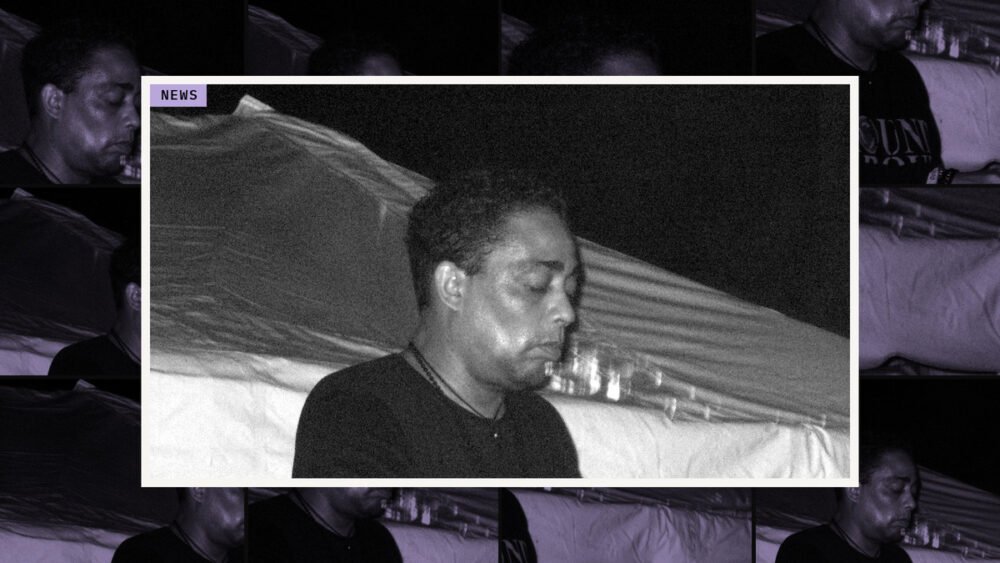
Delano Smith, the Detroit house DJ, producer and Mixmode Recordings founder, has died, his family said on November 23.
That confirmation came 23 days after Juan Atkins, the man who named techno, died at 64.
| Name | What he built | Date |
|---|---|---|
| Juan Atkins | Named techno; died at 64 | October 31, 2026 |
| Delano Smith | Detroit house DJ, producer and Mixmode founder | Family confirmed November 23, 2026 |
Detroit will be tempted to file both men under one heading. It should not.
Smith spent decades making the case that the Motor City’s dance floor was a house floor too, not a footnote to the Belleville origin story.
A statement shared with Mixmag on November 23 began, “It is with profound sadness we announce the passing of Delano Smith, the legendary Detroit DJ, producer, label owner and internationally respected ambassador of electronic music culture.”
DJ Mag reported that the family also posted the statement via the Charivari Detroit festival page.
“A towering figure in Detroit’s musical history, Delano Smith leaves behind a legacy that reaches across generations, continents and virtually every defining era of modern electronic dance music,” the statement said.
“His contributions to the development of DJ culture, house music and the worldwide recognition of Detroit’s underground musical heritage are immeasurable.”
“Above all, his legacy will live on through the people he touched, the culture he helped build and the countless dancefloors that were forever changed by his music.”
Born in Chicago and raised in Detroit after his family moved there when he was 5, Smith started DJing as a teenager in 1978, playing funk, disco and soul in the city’s clubs before house and techno had been neatly separated.
Mentored by the late Ken Collier, with whom he shared a residency, he landed a residency of his own at L’Uomo by 18, in 1981.
Jeff Mills has said Smith “influenced either all or most of the techno generation.”
That is the tribute the techno history usually wants. The work Smith kept doing was house.
He stepped away in the mid-1980s and came back in the 1990s, forming Detroit Beatdown with Norm Talley and Mike “Agent X” Clark.
Their 2002 compilation Detroit Beatdown Vol. 1, on Third Ear Recordings, carried Smith’s first production, “Metropolis,” and pushed a slower, soulful Detroit house sound at a time when the city was sold to the world as a techno town.
From about 2000 to 2006, the collective ran free Sunday nights at a Detroit restaurant called Agave. “Dude, it just got to be phenomenal,” Smith told Little White Earbuds in 2012.
He founded Mixmode Recordings and, after a 2009 meeting with Sushitech founder Yossi Amoyal at Berlin’s Panorama Bar, cut the records that defined his later career, including the 2012 album An Odyssey and 2014’s Twilight.
Those records traveled. Panorama Bar, fabric and Rex Club were part of a decades-long circuit, and he was still playing this year, including Movement in Detroit, Minnesota’s Great Beyond Festival and New York’s Refuge.
No cause of death has been disclosed. Smith had previously received treatment for cancer, and a fundraiser was launched in 2023 for specialist treatment after his illness had spread.
The family statement, as quoted by 5 Magazine, said he “belonged to a generation that helped establish DJing as an art form.”
“He understood that the value of a DJ was not measured by popularity or visibility, but by musical knowledge, the ability to read a room, the courage to introduce new sounds and the responsibility to honor the music that came before.”
The obituaries will reach for “Detroit electronic” because it is tidy. Smith’s records, and the rooms that ran on them, were house. That is the story he started telling as a teenager in 1978, and it is the one worth keeping.