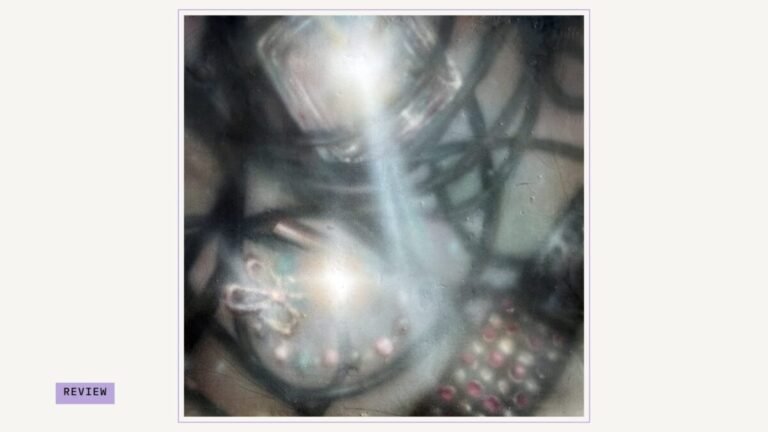
Snakes & Ladders is Armand Hammer at their most present: a compact surprise album on which billy woods and ELUCID write as fathers in a warm kitchen, then tell 2026, without code or a rollout, exactly what is waiting outside the door.
They started the record in the winter after Mercy, gave themselves a deadline before the New York snow melted, and cut 16 tracks in a little over 43 minutes. The method is the point, and it works: this is not the single-producer frame of last year’s Alchemist collaboration, and it is not a victory lap. It is a present-tense dispatch whose writing is sharp enough that a few short, texture-heavy tracks still leave a serious record.
The album arrived November 11, 2026, on Backwoodz Studioz, the label behind their work since the duo’s first releases in 2013. There were no official advance singles. The only credited features are DJ Haram on "Graveside" and $ilkmoney on "Risk."
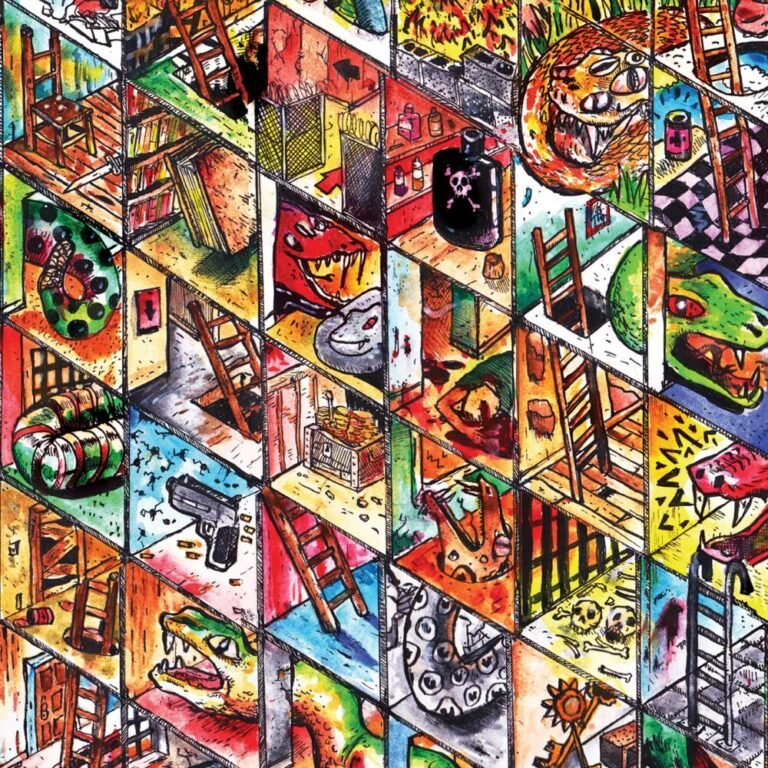
A deluxe edition is packaged as a playable board game, with rules by woods, art by Shane Ingersoll, and insert art by ashes57. Backwoodz has called it the first deluxe edition they have issued for an Armand Hammer first edition, limited to 800 copies. Steel Tipped Dove engineered the sessions, and Willie Green mixed and mastered them at The Greenhouse Recording Co., except "Nightswim," which Kenny Segal mixed.
woods said the plan was to "record in this moment about everything that we’re feeling right now and that’s going on right now." That is a plainer brief than most Armand Hammer records have ever advertised, and the songs keep it.
"Deadbolts," produced by clipping., opens on spare piano and builds into deep, reverbed percussion and shrieking sound effects, a calm room that does not stay calm. woods moves through cooking, a football game, and coats zipped so the kids can throw snowballs until their hands ache. ELUCID gets home to butter and herbs, and his four-year-old’s question, recorded for the track, cuts through: "Daddy, are you happy?"
That question is the album’s real first move. For more than a decade the New York duo has made underground rap sound like a private conversation held in public, dense enough to live among the underground rappers who treat the form as literature. Here the conversation is also a parent’s, and the danger is not a metaphor: it is the street, the job interview, the camera already running.
What they refused, as much as a campaign, was the single-producer room. The credits scatter the work across clipping., Kenny Segal, Sebb Bash, Kara-do, Mekala Session, Jeff Markey, Child Actor, Animoss, Theravada, Petter Eldh, Saint Abdullah and Eomac, Messiah Musik, Preservation, and Steel Tipped Dove. Segal, Sebb Bash, and Mekala Session are the only names to land on more than one beat, though woods has said Segal’s hand runs through more of the album than those three official credits show.
On paper that roster should sound like a pile of leftovers. It does not. The record often plays as one wintery mood, loop-based and spacious, with beat switches that still belong to the same house, and Willie Green’s mix is the quiet reason why.
The writing is what climbs, and it has unusually little code to hide behind. On "Assembly Lines," produced by Preservation, woods gets to the joke that is no longer a joke: "ChatGPT’d a job application, the interview was online, the interviewer was AI." On "Lock Out/Tag Out," produced by Sebb Bash, he cuts through on "I’m just trying to raise my babies."
"Jet Magazine," with a glistening, acid-jazz bounce from Kara-do and Mekala Session, is where the record gets up on its feet. woods chants "Nostrand, Atlantic, Trinidad, Suriname!" like a roll call of a diaspora that still has to live inside this American project, and ELUCID tugs against the drums as if the floor might give. It is one of the album’s clearest ladders.
"Nightswim," produced and mixed by Segal, is where that climb turns icy. "Unfortunately it’s not if, but when they gon’ kill us," ELUCID says; woods answers with the hard comfort of "Of course you got it out the mud," and "that’s where it’s kept." The song has the slow tension of someone who already knows the street is recording.
On "Dogville," produced by Messiah Musik and Segal, ELUCID snaps, "If we talking murder, politic is flesh and bone," and woods answers, "Smash the prison doors / Build something better than what came before." "Gravity," a brief woods solo over Child Actor’s gentlest beat, closes the first half by letting a rare tenderness show, then getting out of the way.
The snakes are real. "TimesTables," at a minute and 43 seconds, can pass before it settles, and "Incidentals" and the abrasive "Graveside" lean on atmosphere in a way that leaves some of the writing under-supported. Those are the squares where the compact form, the same speed that makes the album feel necessary, also leaves a few ideas looking like sketches.
Steel Tipped Dove’s "Risk" finally lets $ilkmoney through the door, the album’s only guest emcee, late and pointed, a burst of aggression after the haze. The closer, "if we must die," takes its title from Claude McKay’s 1919 sonnet, a suggestion that came from woods’s mother, and is produced by Sebb Bash, who also made "Lock Out/Tag Out" and "don’t say it if it isn’t true." Ending on that phrase is a choice, not a flourish.
ELUCID, speaking earlier this year, reached for Toni Cade Bambara and Jayne Cortez, whose words from "There It Is" open "Vespers," as a reminder to "stay busy and do the work, man." Cortez is not a cameo. She is the tradition they are volunteering for, now as fathers with young children in the house.
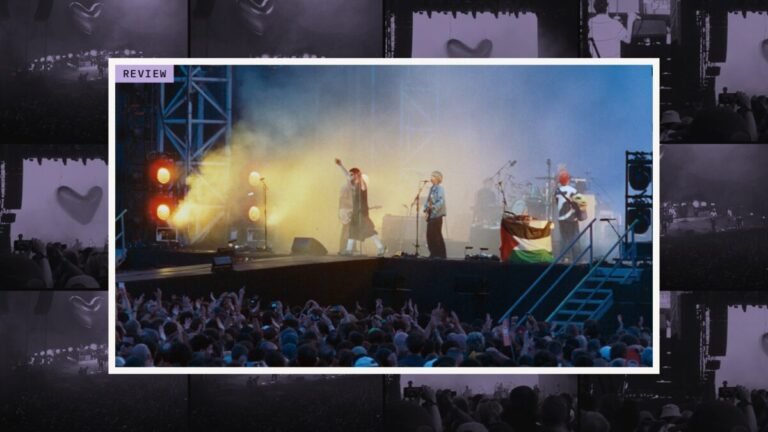
This is what it looks like when a group that already knows how to start a record label decides the most honest release strategy is almost no strategy at all. They put the record out on Backwoodz, booked no months of explanation, and scheduled a November 15 record-release show at Brooklyn’s Music Hall of Williamsburg as they closed the run.
Snakes & Ladders is not Mercy, and it does not need to be. It is a compact, present-tense record that would have gone stale if they had asked anyone to wait for it. The writing climbs, a few short tracks slip, and the bet itself is right: they dropped the album because the board was already in play.