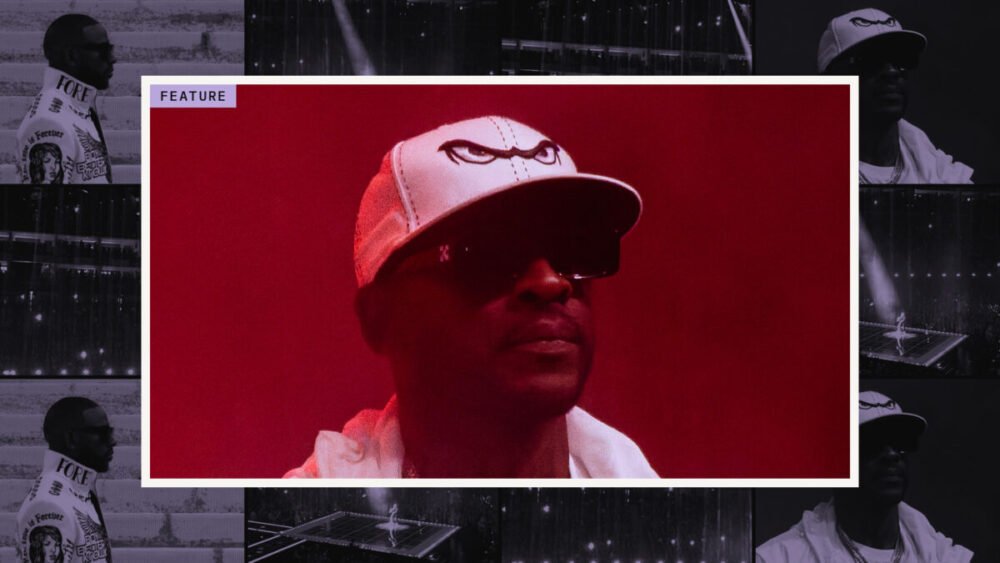
Skepta has spent seven years telling anyone who would listen that UK rap could do better. On Friday he finally put his own money where his mouth is, and The Fork and Knife arrives less as a comeback than as a challenge to the whole scene.
The Tottenham MC’s sixth studio album landed on November 6 via his own Big Smoke label in partnership with Epic, his first solo full-length since 2019’s Ignorance Is Bliss. It runs to 15 tracks, with a guest list that includes Central Cee, Jorja Smith, Novelist, Fred again.., PlaqueBoyMax, Asake and his brother JME.
He is not being shy about the stakes, either. “I don’t think there’s been a good grime album for a long time,” he told BBC Newsbeat. “And I’m here to set levels.”
That is a big line from someone with a Mercury Prize for Konnichiwa already on the shelf, and it lands in a very specific moment. In September, Digga D publicly called out the viral “UK Poo” wave of TikTok tracks as “foolishness,” and Skepta told the BBC he is “here to make rap sophisticated again.”
You can hear the same frustration in the Instagram post that announced the record on October 1. “For a long time I have felt like art is slowly losing its meaning and artists are slowly losing the will to keep creating,” he wrote, pointing at “the silencing, the excessive meaningless content, dancing for the algorithm.”
Plenty of veterans grumble about the kids. What makes Skepta’s version worth taking seriously is that he has the receipts: as one of the best UK rappers of his generation, he helped drag grime back into the mainstream with “That’s Not Me” and “Shutdown,” records built on an attitude rather than a trend.
Grime as punk, and Suggs as proof
The most telling choice on the album is lead single “Innocent Smile,” which pairs him with Chase & Status and Madness frontman Suggs. On paper it looks like a novelty; Skepta frames it as a family tree.
“I think that grime music is punk music. I think grime music is two-tone,” he told British GQ, adding that he sees “Shutdown” and “Innocent Smile” as “almost the same record,” both British, both punk, both about social constructs. The contemporaries he says he measured himself against while making it were not just grime MCs but Liam Gallagher, Mick Jagger and David Bowie.
It is a sharper argument than it first sounds. Two-tone was a multiracial British pop movement that put working-class anger on Top of the Pops, and grime did something similar for a generation of London kids raised by immigrant parents.
The lyrics make that connection explicit. “Ain’t no love for an immigrant child / The writing’s on the wall, has anyone else noticed? / Was it Brexit? Was it Covid?” he raps on the track, as quoted by the BBC, and he told Newsbeat that “grime is a product of immigration.”
Aidan Zamiri’s video, which Sony describes as setting Skepta against “a heightened, intense version of London,” fits a record whose press notes call life between two cultures “a source of strength, a superpower.”
Why the title matters
The Fork and Knife is a joke at Skepta’s own expense, and a good one. In his Complex UK cover story he recalled winning Man of the Year at the GQ Awards, being served beetroot, and his mother recognizing the fancy dinner the family had once aspired to.
“She just wants ground rice and stew,” he laughed, before explaining that the album is about being careful what you set your sights on as success. It makes this a record about arriving that is more interested in what arriving costs.
That self-awareness is also a hedge against the obvious risk. Seven years and a “set levels” promise is a lot of pressure to put on 15 songs, and Skepta knows it, telling the BBC that “it took six years to make this because it’s important to make sure we’re not tone deaf.”
Where to start
For the thesis, start with “Innocent Smile.” For the bridge between generations, go to “Broken Hearts,” which Skepta told GQ began as a track for Dave before Central Cee took the verse and Jorja Smith replaced a sample-pack vocal late in the process.
For pure grime family business, there is “Belly,” a nine-minute posse cut featuring JME, Frisco, Kibo, Queenie, Bossman Birdie, Mayhem NODB and Kruz Leone. Putting newer names like Bossman Birdie next to Boy Better Know veterans is the clearest sign that the “set levels” talk is meant as an invitation, not a lecture.
If you want to see it live, you are probably too late: Complex reports that the London launch show at The Cause on Friday and December dates at Élysée Montmartre in Paris, La Madeleine in Brussels and Gashouder in Amsterdam are all sold out.
He also insists this is not a farewell. “I’ll never retire from music,” he told Complex, and on the evidence of how much he still has to say about the state of British rap, that sounds less like a promise than a warning.
