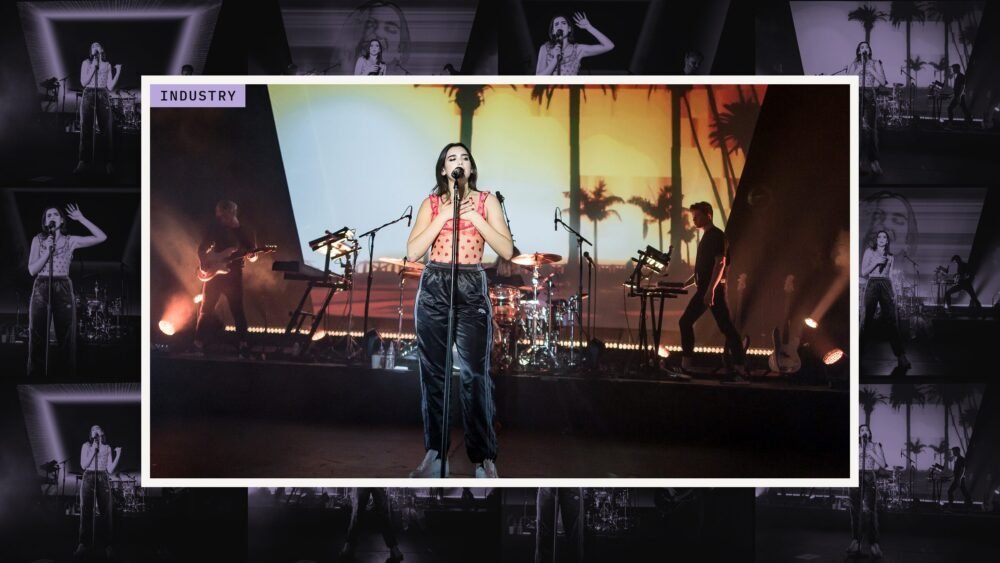
The only "Levitating" lawsuit that ended in a settlement, rather than a courtroom win for Dua Lipa, was never a melody fight. It was a paperwork fight: a session player who says he licensed a talk box performance for one version of a hit, then watched that performance travel into the remixes that made the song even bigger.
On November 9, lawyers for talk box musician Bosko Kante, Lipa, producer Stephen Kozmeniuk and Warner Records filed a stipulation in federal court in Los Angeles dismissing the entire case with prejudice.
Kante cannot bring the same claims again. Each side will bear its own costs, expenses and attorneys’ fees.
The filing, signed by counsel in late October, does not disclose any payment, credit or other terms. Rolling Stone and Billboard report that the parties have settled.
Kante’s lawyer, Na’il Benjamin, told Rolling Stone, "We’ve resolved Bosko’s disputes with Warner." He added, "We’ve always maintained that Bosko’s contributions to ‘Levitating’ were important."
"Artist contributions are valuable, and proper use, credit, and compensation should be provided accordingly," Benjamin said.

That credit question is older than the lawsuit, and it is older than the remixes. In or about 2019, Kante’s third amended complaint alleges, Kozmeniuk approached him about "creating and performing a talk box performance" to be licensed in connection with "Levitating."
Kante, who describes himself in the filing as the founder of ElectroSpit, says he composed, created and recorded that part. He also says no written agreement, "including any sort of ‘work for hire,’" was ever signed.
What he did agree to, the complaint alleges, was an oral license for the original recording only: $1,500, a share of neighboring rights split among seven musicians, a credit, and "no reuse or sampling" of his work beyond the original version of the track.
The original "Levitating" arrived on Lipa’s album Future Nostalgia on March 26, 2020. That is the version the alleged license covered, and it is the one with a public credit trail.
On the auto-generated YouTube Topic upload of that album cut, provided to the platform by Warner Records, the credit line reads "Talkbox: Bosko Elecrospit Kante." The spelling is wrong (the complaint and his company use ElectroSpit), but the credit itself is there, on the original, in the label’s own delivery metadata.
Then came the remixes, and with them the argument that a credit on the album version is not the same thing as permission to reuse the performance.
Kante alleges that his performance was sampled in The Blessed Madonna’s version featuring Madonna and Missy Elliott, released August 13, 2020; in the remix featuring DaBaby, released October 1, 2020; and in a version created for the American Music Awards in November 2022.
He claims all three used more of his work than the album version did, including additional lyrics and melody that do not appear on the original. Those remain allegations, untested at trial.
The DaBaby remix is the version Kante’s complaint called "the most successful version" of the song. "Levitating" reached No. 2 on the Billboard Hot 100 and spent 77 weeks on the chart, Billboard notes.
A hit can have three copyright stories at once: the song, the recording, and the people who played on it. Lipa already won the first kind of fight twice; this case was the third kind, and it settled.
Session licenses and sample licenses are usually limited instruments. They name a particular recording, sometimes a territory and a term, and they do not automatically travel into a remix, which is often treated as a new use of the underlying performance.
A neighboring-rights split on the album master is not a songwriter royalty, and it is not a blanket clearance for every later mix. Clearing the composition is not the same as clearing the player.
If there is no written work-for-hire, and the oral deal (as Kante alleges) forbids reuse beyond the original, a remix is not a victory lap. It is a fresh clearance problem that someone chose not to write down.

What labels and producers should do is unfashionably simple. Put the versions in writing before the session: the album cut, radio edits, official remixes, stems sent to third-party remixers, live uses and syncs.
If a remix cycle is part of the plan, price it, or require a new license before the new version ships. A $1,500 session fee is payment for the work that was booked, not a secret deed to every future cut of the record.
The plain-language lesson is this: if the paperwork only names the album version, the remix is a new use until someone has agreed otherwise.
The other "Levitating" suits were melody fights, and Lipa won them. In June 2023, a federal judge dismissed a case brought by Artikal Sound System, which had claimed the hit copied its 2017 song "Live Your Life," after finding the band had not adequately alleged that anyone behind "Levitating" had heard it.
In March 2025, Judge Katherine Polk Failla granted summary judgment against the publishers of songwriters L. Russell Brown and Sandy Linzer, who had claimed "Levitating" copied their disco songs "Wiggle and Giggle All Night" and "Don Diablo."
Melody claims of that kind often collapse because pop songs recycle a small pool of gestures. A session license is a contract problem, and contract problems do not evaporate just because a record is a hit.
In September 2024, Judge Hernán D. Vera refused to throw out Kante’s copyright claim, writing that there was "no requirement that Plaintiff be made to identify, second-by-second, which portions were used." The judge also noted that, at oral argument, "Defendants’ counsel conceded that at least some portion of the Kante Recording was used."
The accounting claim was dismissed, and the rest of the case was heading toward a 2027 trial when the stipulation arrived. By dismissing with prejudice, both sides avoided a public airing of what that oral deal actually said.
A settlement that keeps its numbers private will not rewrite standard contracts on its own. As we have written in our look at record songwriter collections, the money in a hit is split across doors that do not always open together.
The filing still puts a marker down. The next time a remix turns a good record into a global one, the question will be whether the people who built the original were cleared to go along for the ride.