On November 3, Suno asked a federal court in Boston to accept that typing an artist’s name into its generator is just another way of saying “genre.” It is the most convenient legal argument of the year, arriving as the same tool moved off Suno’s own site and into everyone else’s chat window.
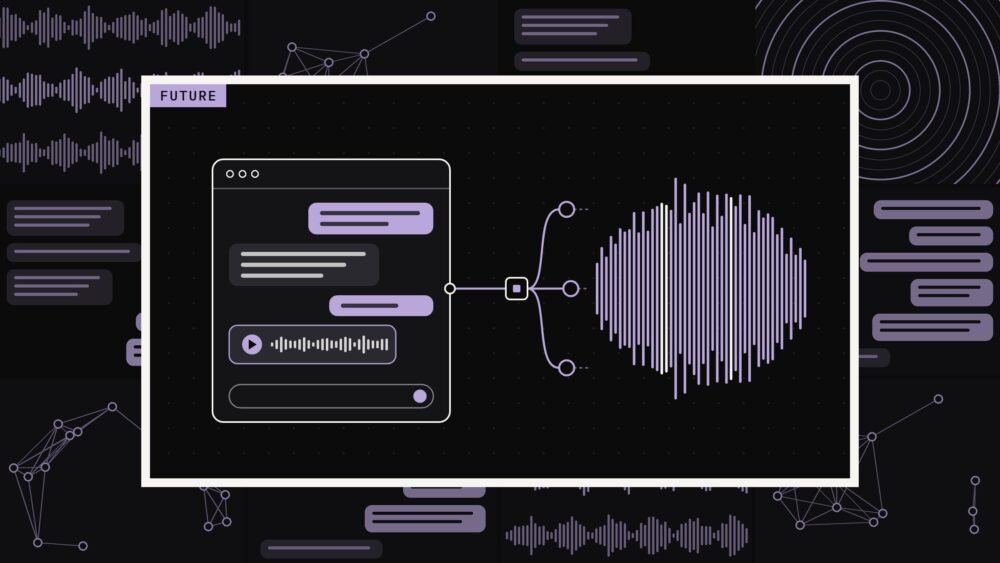
The product move came first. On October 28, Suno put a beta Model Context Protocol server in front of the AI assistants people already use.
Claude, ChatGPT, Claude Code, Cursor, Gemini and other MCP clients can all talk to it. You stay in the chat, describe a song, upload a voice memo or a loop, or ask for a cover, an extension or a mashup.
Suno makes the track with no API key, on the credits of your current plan, including the free one. The songs land in your Suno library as if you had made them on the site.
MCP is an open standard for hooking assistants to other apps. Once the connector is on, song generation stops being a destination you visit and becomes a command you can issue from the window where you already write emails, code and prompts.
Some of those apps only allow connectors on certain paid plans, Suno says, but the company’s own side is open to every Suno tier, via early access.
Then came the legal ask, a week later. Suno moved to dismiss a proposed class action, first reported by Billboard, brought by Jason Isbell, David Lowery, Guy Forsyth and Eduardo Calle.
The suit was filed August 31 in the U.S. District Court for the District of Massachusetts as a right-of-publicity case, not a copyright one. The musicians allege that Suno lets users type an artist’s name and get music in that artist’s style, commercially exploiting a musical identity without consent.
Suno’s answer is that an artist’s name is ordinary language, a shorthand, a tag. “When people describe styles of music, they often use artists’ names as shorthand for the genre they perform in,” its lawyers wrote in the motion Billboard obtained.
They argue there is “nothing unlawful” about seeking to replicate the “vibe” of a particular artist. It is no more illegal, by Billboard’s account of the motion, than a human musician saying, “let’s go for something here with more of a Jason Isbell vibe.”
The law does not condemn that “universal practice,” they add, and “the First Amendment would not allow it to.”
The company also says it does not pass those names to the model. A prompt mentioning Duran Duran, Billboard’s account of the motion says, might be redirected into “New wave, Synth-pop, Pop rock.”
Complete Music Update, working through the same filing, quotes Suno’s lawyers on the Isbell example. A request for his style is “effectively” translated into “contemporary Americana singer-songwriter with finger-picked acoustic guitar,” with an output carrying the “clear male vocals and country twang” of that genre.
“What Suno does is no different,” they argue, and “there is nothing unlawful about that.”
That is a convenient story about tags, and a less convenient one about what the tags are standing in for. The plaintiffs say the filter can be walked around, and that even when a name is swapped for style words, the system is still using the identity the name points to.
Suno says Congress chose not to give intellectual property protection to an artistic style, “precisely to allow subsequent creators to build on the prior works of a genre.” The lawsuit, it argues, would create “a shadow state law IP regime” in conflict with a federal one Suno says has stood for more than two centuries.
Suno’s other courtroom fights look different. MIDDERMUSIC has covered the Elvis Presley rights holders’ suit over alleged voice cloning, a claim about a specific likeness under Tennessee law.
The Isbell case is trying to win a broader point: that “in the style of” can be an identity claim even when the output is not sold as a fake Jason Isbell record.
The two cases should not be collapsed into one another, even though they arrive at the same company while it is busy moving the generator off its own site.
That is the part the motion does not advertise. If a judge accepts that a name in a prompt is only a genre request, then putting that request into ChatGPT or Cursor is just distribution.
Distribution, in this case, means a quicker way to ask for “synth-pop” or “finger-picked acoustic guitar” without opening a new tab.
If the name is doing the work of an identity, Suno has just carried that work into the default workplace of the internet, next to the apps where people already talk, write and ship code.
The SoundCloud and ElevenLabs pipeline we wrote about last week pointed in the same direction: AI music is no longer a standalone toy. It is being built into the places where tracks get made, stored and released.
Suno’s MCP is more intimate than a publishing deal: it makes the generator a sentence you can type where you already are.
Suno wants a court to treat an artist’s name as a tag, and the MCP treats that tag as a feature you can now invoke without even opening Suno. The motion will get its hearing; the product already has its answer.